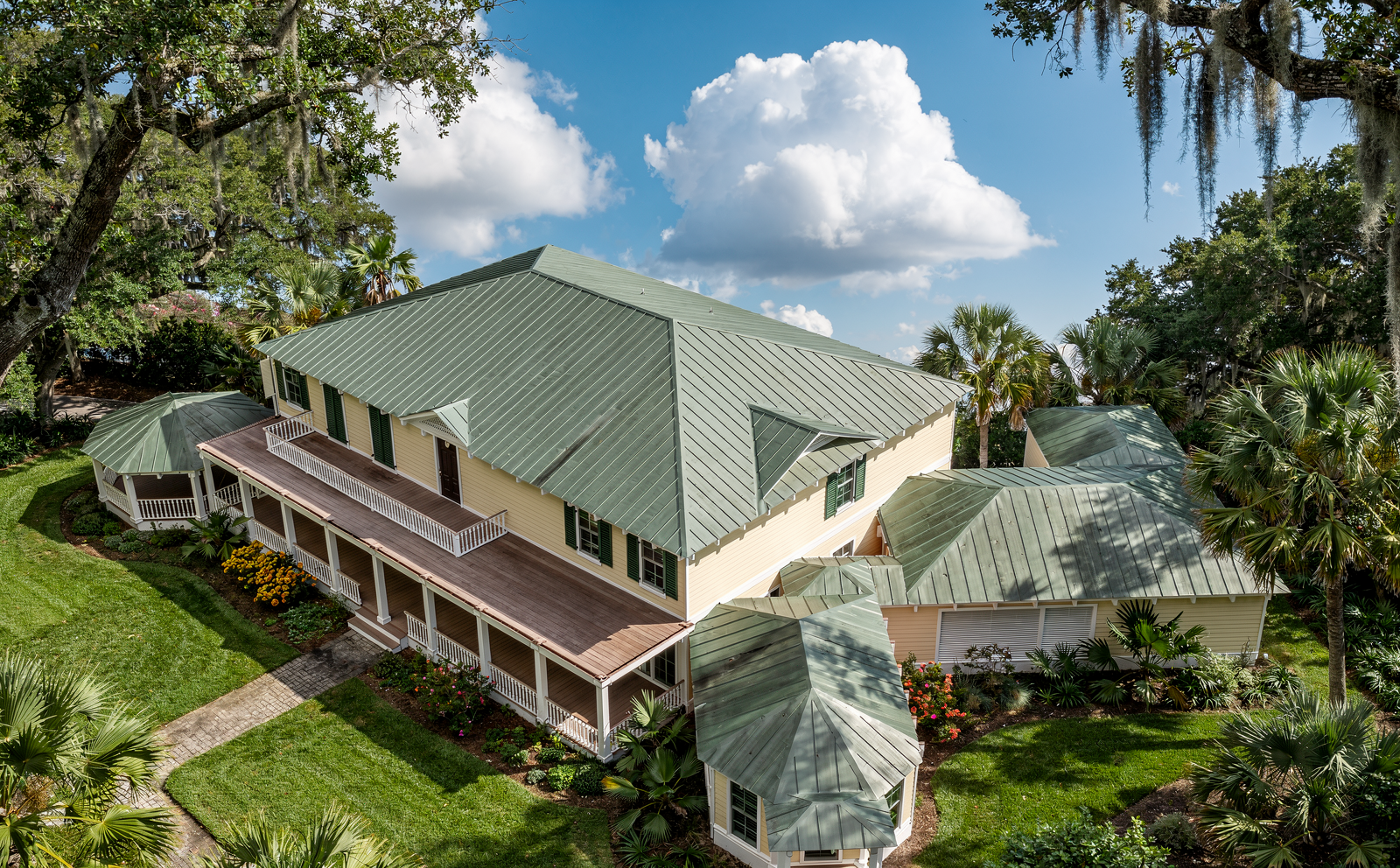
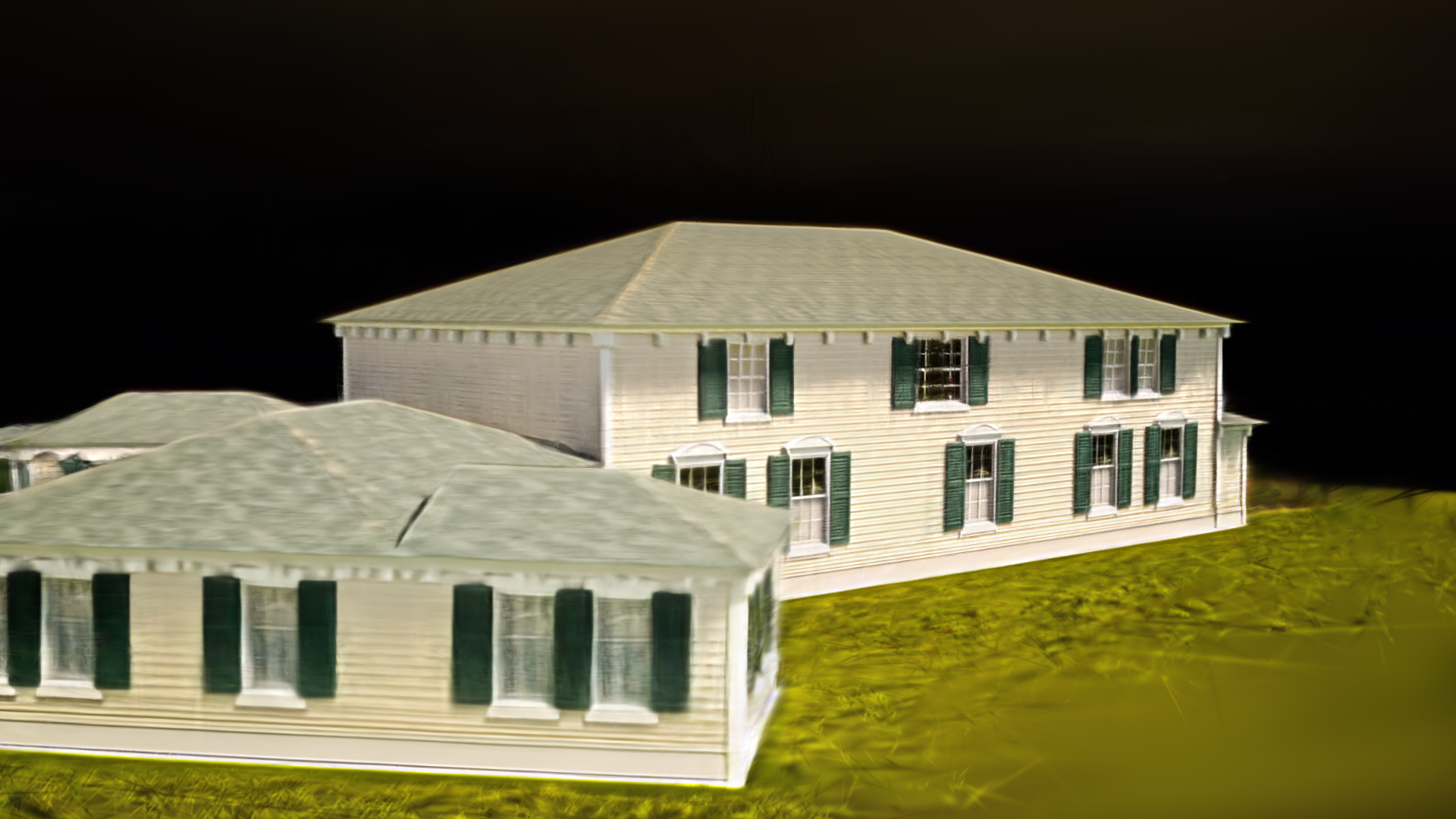
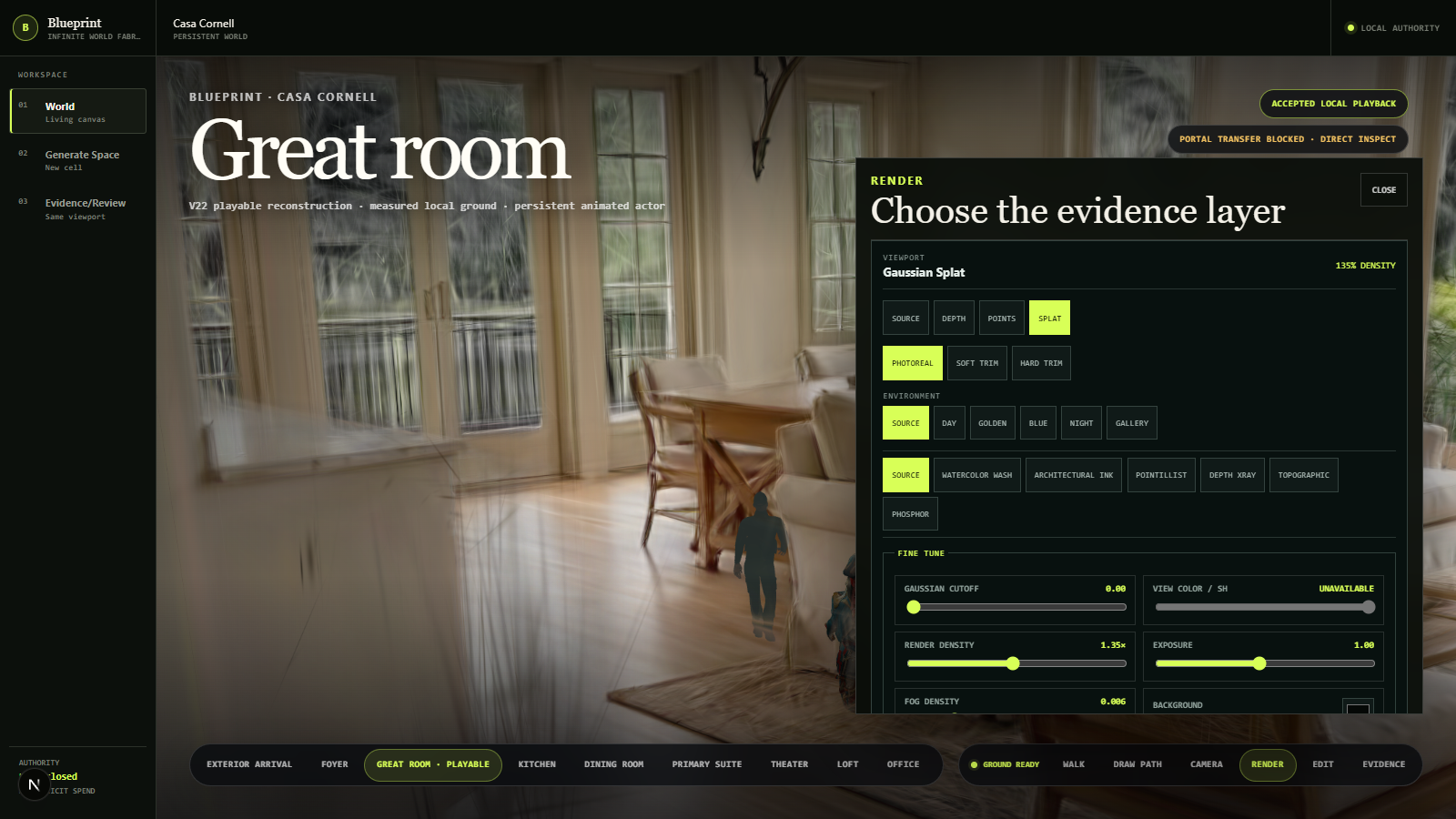
Blueprint turns plans, images and generated views into directable 3D environments. The current Studio keeps reconstruction results, cameras, Gaussian edits, evidence and the playable interior on one canvas. The high-resolution exterior turn and continuous movement between rooms remain active research.
Measured structure, exact cameras, generated appearance, reconstruction and the live scene. Scrub the sequence or use the arrow keys to inspect each saved stage.
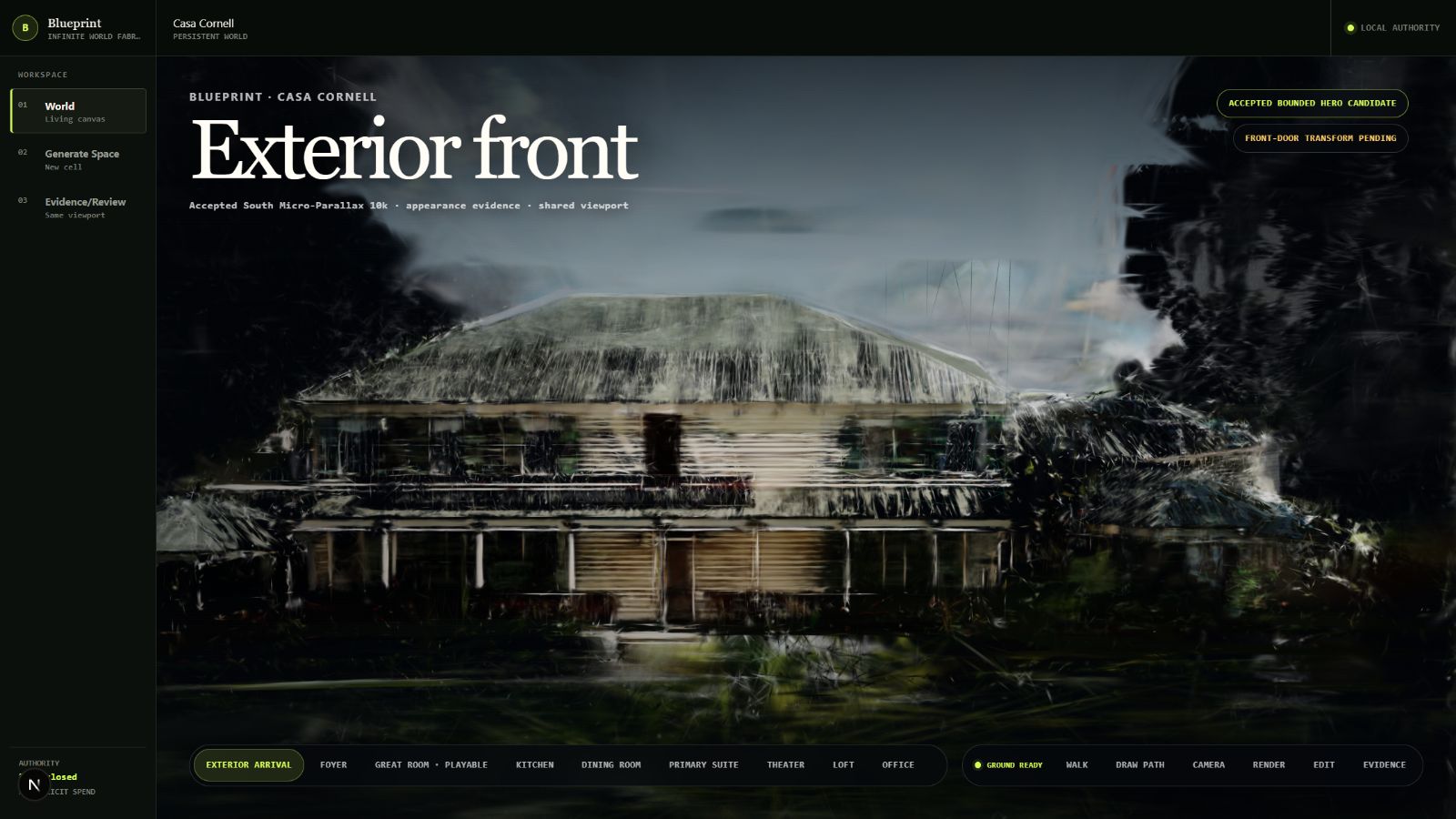
The selector changes the active Gaussian result inside Blueprint Studio. Camera state, edits, actors and evidence stay attached to the environment while the visible representation changes.
The working pipeline begins with photographed plans and continues through dimensional reconstruction, exact-camera references, generated coverage, pose recovery, Gaussian training, held-out review and Studio publication. Each stage keeps its inputs, decisions and outputs linked.
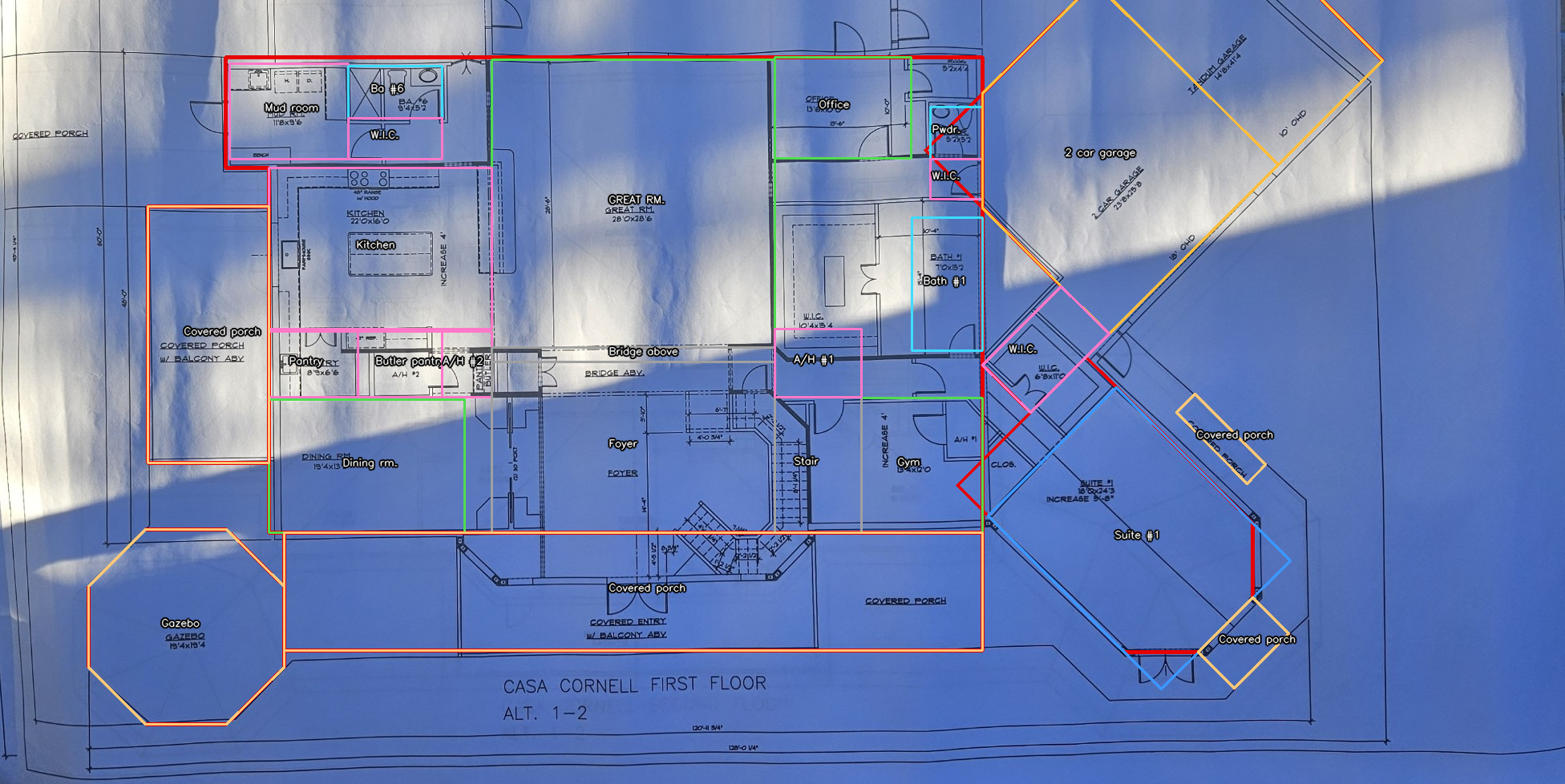
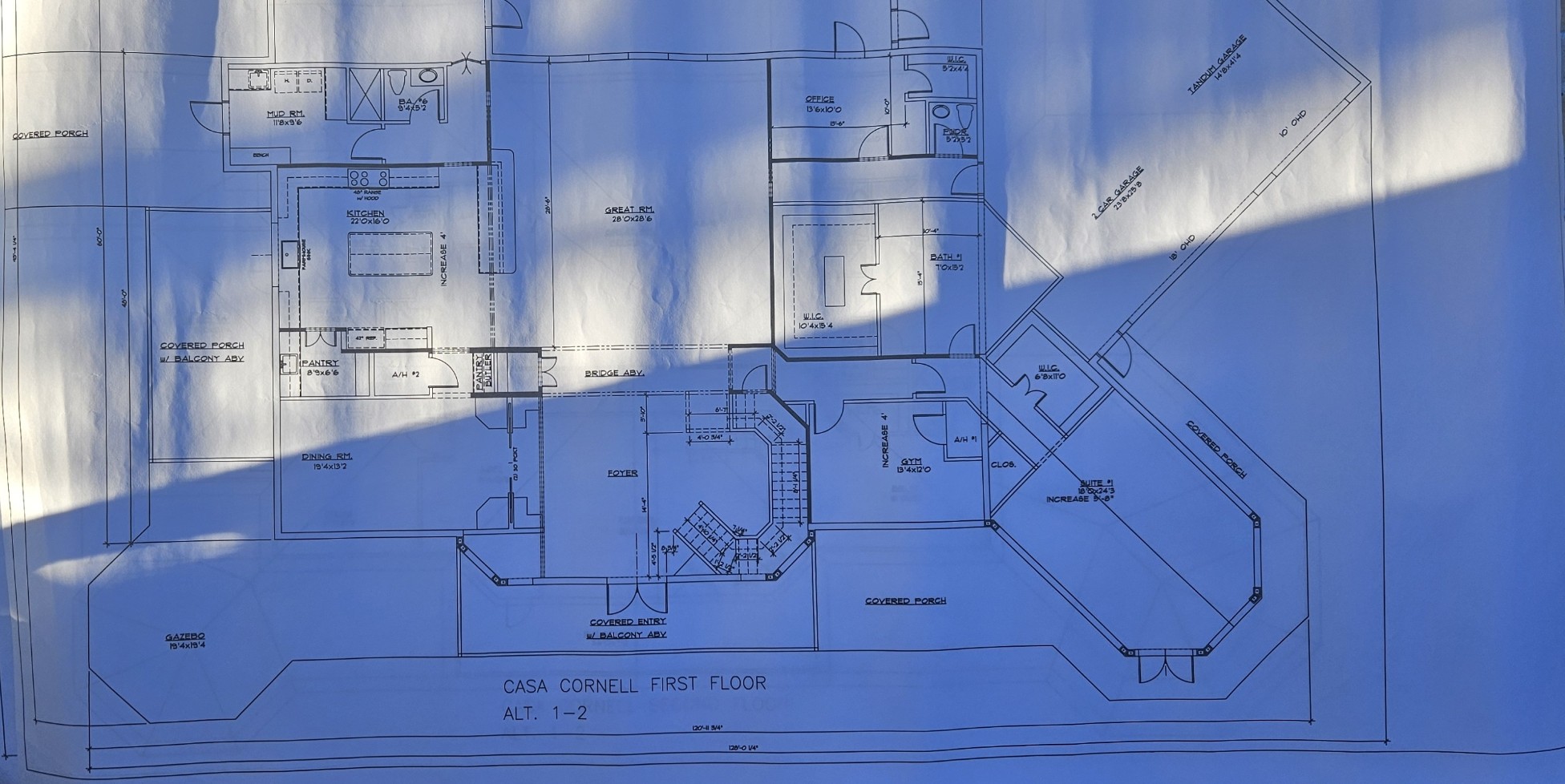
Two phone photographs supplied room names, written dimensions and linework. The dimensions became the independent check for every room and the basis for a measured retrace.
Read the plan study →Still and video models supply candidate views. Camera recovery, depth reprojection and held-out renders determine which frames can support a reconstruction.
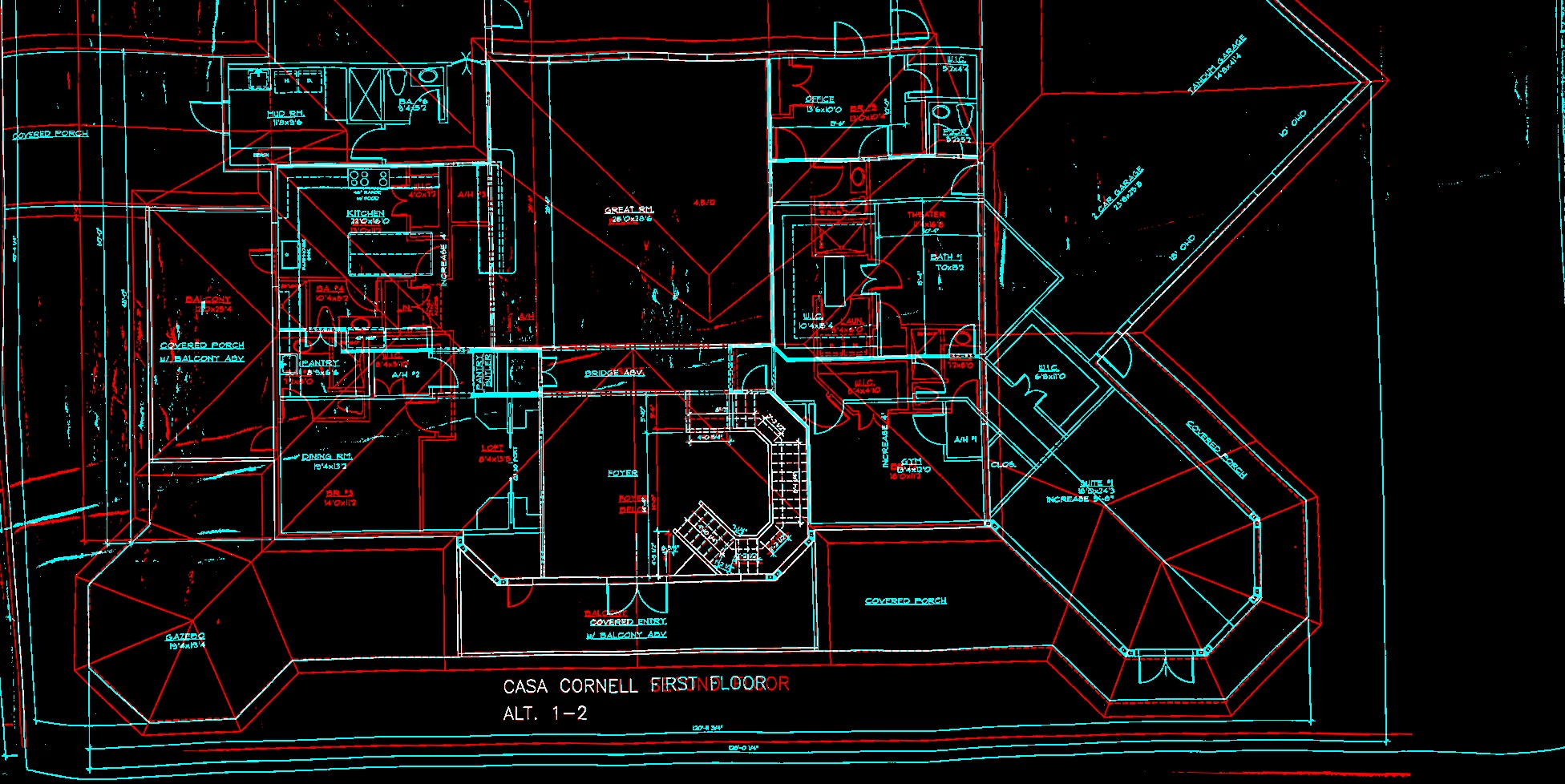
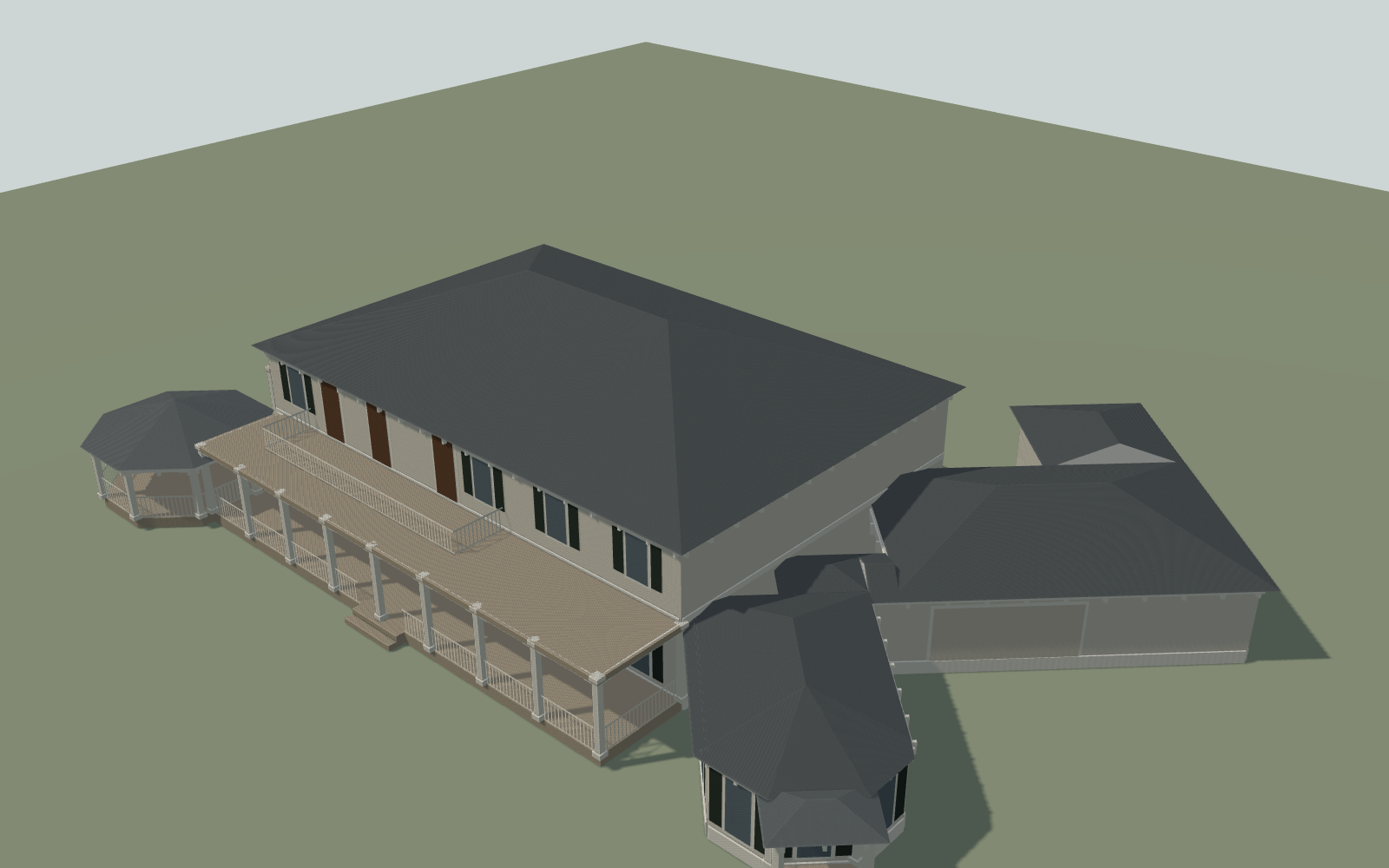
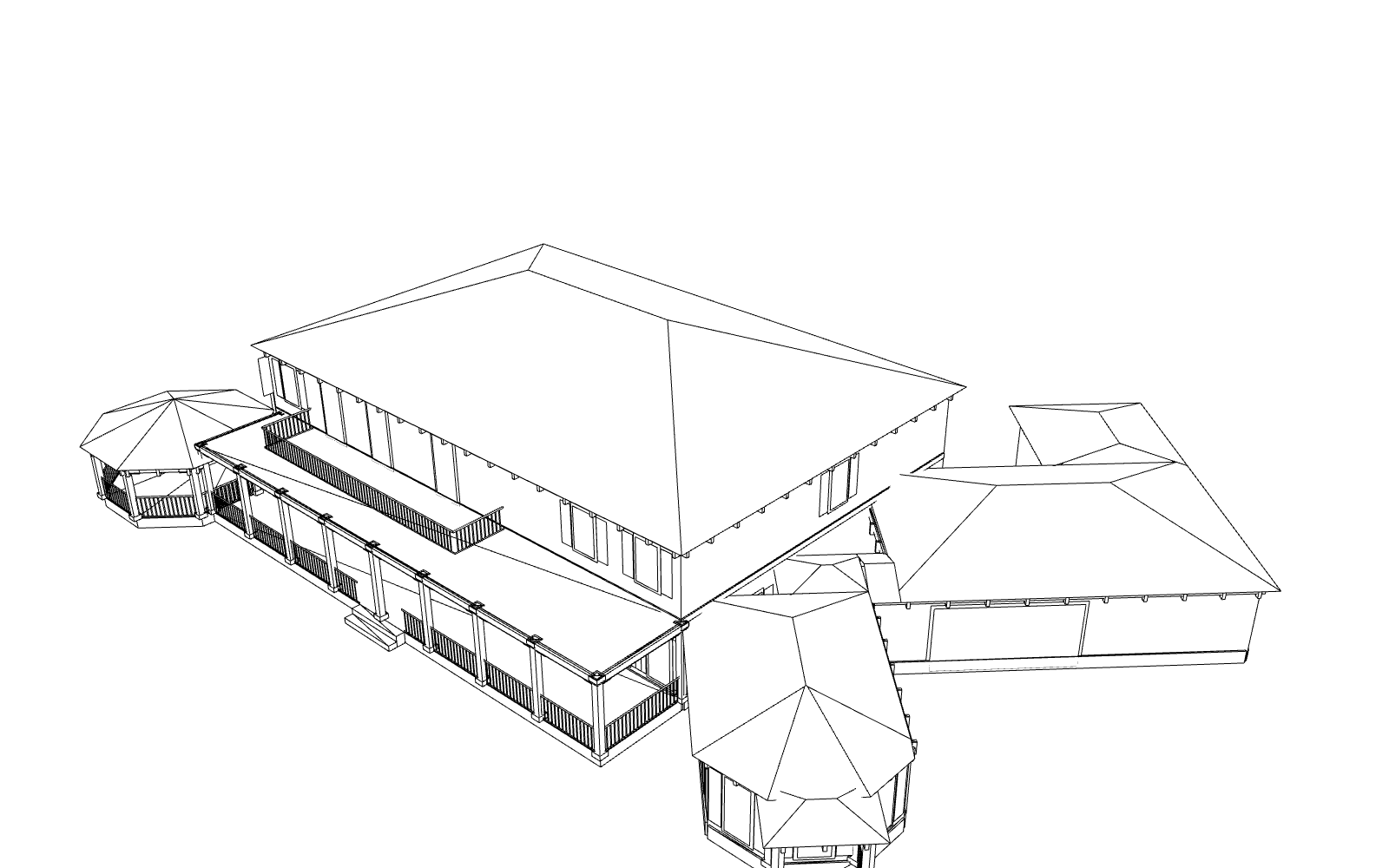
Review the early capture study →The retraced plan became a two-floor envelope with a roof, exterior faces and exact camera schedules. Line renders and depth maps keep generated appearance registered to that structure.
See the measured house pipeline →A 241-frame orbit supplies the camera path, silhouette and depth for a complete turn. Pinned appearance references and bounded motion arcs are filling the side and rear views before the final training pass.
Inspect the missing-angle work →Spatial cells keep stable identities while their representations improve. The Studio supplies cameras, rendering, editing and evidence around one canvas. The retained V22 interior carries the grounded actor and player-control study while release verification continues.
Open the current product chapter →The Studio exposes Camera, Render, Edit, Evidence, Generate and Run around the same scene. Visitors can switch between reviewed reconstructions, tune the renderer, inspect source records and open the playable great-room work without changing products.
The final exterior turn, production-grade path interaction, cross-room transfer, lighting and weather are tracked separately below their current authority.
Camera, Render, Edit and Evidence operate on the same scene and reconstruction catalog.
The great room retains its measured floor, grounded skeletal actor, route timing and single animation clock while source, depth, points and splat representations change.
Twelve outline controls cover the ring, and the first two endpoint anchors are admitted. The first $2.16 1080p Ray arc passed the declared numeric checks after exact endpoint recovery. Visual review rejected identity drift through the intermediate frames. The 360 dataset remains blocked while stronger identity control, anchor repair and reconstruction work continue.
Doorway transforms remain blocked pending overlapping threshold capture. The earlier day, night, weather, fireplace and window-light system is preserved for integration into the shared world.
Exterior, foyer and great room share one world identity while each keeps its own local coordinates.
Across two floors, and 33 of them carry a legible dimension string handwritten on the sheet.
The reviewed room graph holds 117 first-floor and 86 second-floor boundaries. The earlier traced-wall analysis lives on in its own rejected-evidence manifest.
Stable scene, actor and evidence identities let the current Studio grow into production, story and learning tools without rebuilding the spatial work for each interface.
Inspect reconstructions, edit Gaussian surfaces, draw routes, place actors and author camera takes.
Use recorded cameras, actor cues and scene treatments as editable inputs for spatial media.
Keep actors and world events attached to spatial cells as reviewed portals expand the map.
Move from source material through camera evidence, failed studies, accepted representations and runtime behavior.